


The Silver Opportunity: Is Luxury Beauty Missing the Mark?


- Reportage
- HILL
Originally published on Little Black Book
The beauty industry may sell youth but is it overlooking the spending power of older consumers? Sunna Coleman speaks to marketing experts across Asia, home to some of the world’s fastest-ageing populations, about redefining age, aspiration and relevance
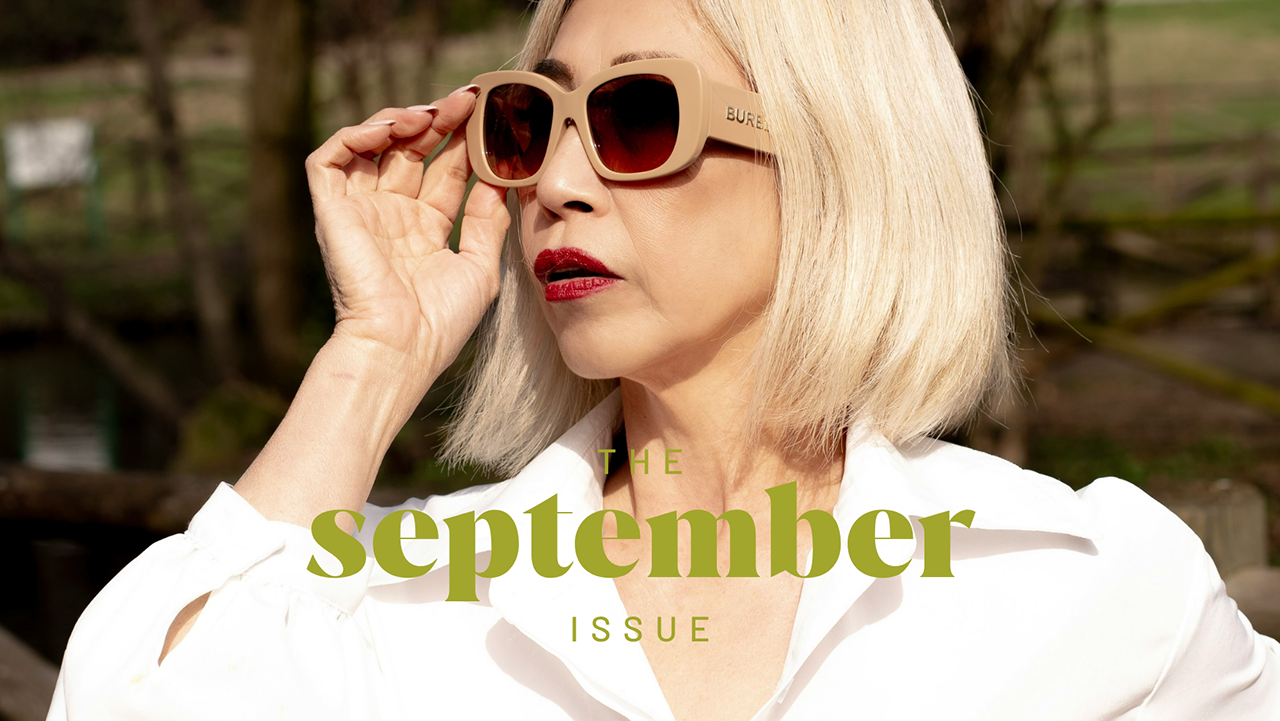
“For decades, beauty and fashion sold one message to older consumers: look younger,” says dentsu Hong Kong’s strategy planning director, Yeeching Wong. “The industry treated ageing as a flaw to manage quietly. But beauty was never just about what’s in the jar. It’s the standard of what’s considered attractive, and that standard is breaking.”
“While luxury fashion and beauty are often represented by youth and beauty, the category’s existence itself is driven largely by older affluents,” says GUT Asia managing director, Jessica Davey. “The demographic shown in the fragrance ad, fashion show or skincare campaign is largely priced out of the higher end of the luxury category. So it makes sense that some brands have started to embrace representations of ageing, from the magnificent Dame Maggie Smith for Loewe at 88 to Charlotte Rampling at 78 for Saint Laurent.”
But, she notes, “In general, luxury still grapples with the representational vs. the aspirational. This is especially true in Asia, all the more interesting given the many multi-generational cultures across the region that treat ageing members of the community and family as valued and revered.”
A recent study on millennials, gen x and boomers by Hakuhodo Institute of Life and Living ASEAN reflects a fundamental shift in the region’s aging population. “A 61-year-old Thai interviewee noted, seniors no longer dress ‘their age’ – they wear what they choose and reject being viewed as ‘old’,” shares managing director, Ryusuke Aoki. “Self-expression through brands is no longer exclusive to the youth. However, a market gap exists. Our quantitative survey reveals that approximately 56% of adults in their 50s and 60s across ASEAN feel there are not enough brands tailored to them in fashion, beauty, and other categories.”
In Hong Kong, Yeeching tells LBB that ‘Affluent Silvers’ are more likely to take risks than the general population, more likely to seek out new ideas for inspiration, and more likely to make impulsive purchases. “Paired with significant disposable income, this is not a cautious, declining audience. It’s a confident one, actively looking for brands to catch up,” she says.
South Korea entered a ‘super-aged society’ in December 2024, when people aged 65 and over surpassed 20% of the total population. “As a result, the presence and influence of older consumers in the market is becoming increasingly significant,” says Hyejin Park, senior consultant at TBWA\KOREA Senior Lab which references Korean seniors with high purchasing power and dynamic lifestyles as the ‘A Generation’.
“In an FGD conducted by Senior Lab, one woman in her 60s said, ‘I’m willing to pay another one or two million won for something that gives me satisfaction and is truly worth it.’ Yet most luxury brands still do not fully see this market,” Hyejin says. “Brands continue to focus heavily on the aesthetics of youth, often using senior models primarily as a way to communicate an image of being inclusive and cool to younger consumers.”
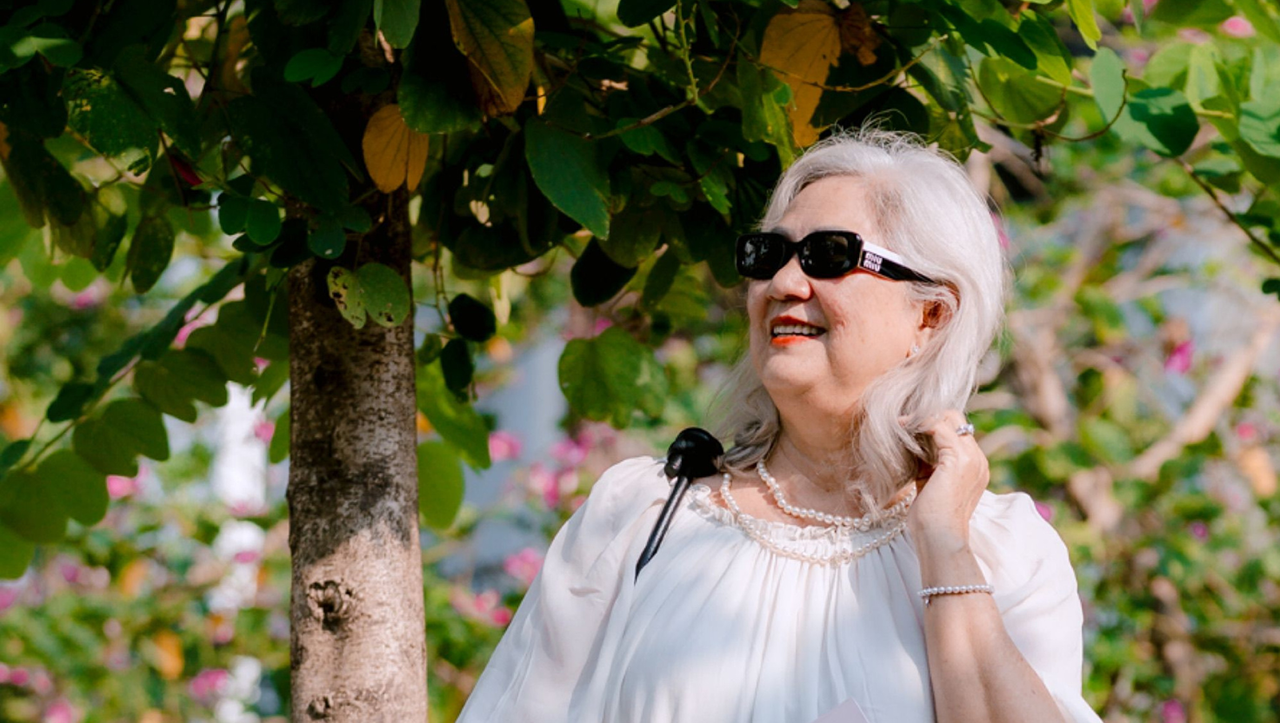
Luxury Knows Time Is Value. Beauty Doesn’t
“Luxury has spent centuries teaching us that time creates value: patina, provenance, character, rarity. Just not, apparently, when it comes to ourselves,” says Rui Nago, chief strategy officer at VML & Ogilvy Japan. “Beauty is changing. Some brands still promise to erase time. Others talk about ageing gracefully. But neither has found a truly seductive answer. One fights ageing; the other asks us to accept it.”
Perhaps the next opportunity is not age acceptance, but “age aspiration,” he says. “For now, let’s call it agecraft: not fighting time, nor simply accepting it, but learning to become better with it. More confident. More individual. More distinctly ourselves.”
Despite the luxury industry being built on the value of time, the beauty industry has been built on “delaying decay” and is now “struggling to cast senior individuals as product beneficiaries without undermining its own premise,” says Yolanda Luo, associate strategy director at Grey Hong Kong. “Is she proof the product works, or a genetic exception, heavily retouched? Neither answer flatters. And this is the contradiction at the heart of the problem.”
The uncomfortable truth, she says, is that “silver consumers may be the least persuadable audience in the market. They’ve lived through decades of marketing cycles. Their loyalties and routines aren’t shaped by a 30-second spot. Instead, they trust word-of-mouth from peers who’ve actually used the product, and they can smell a gimmick a mile away.”
So who is silver representation really for? “I suspect it’s the young who are noticing their first lines,” Yolanda says. “A vital, unbothered 70-year-old in a campaign offers them a glimpse of a future that doesn’t look so frightening. That has value. But let’s not confuse it with genuinely serving silver consumers whose real needs still go unmet.
“Mature skin behaves differently. It’s drier, thinner, and slower to heal. It needs honest efficacy, packaging that opens easily, routines that don’t require a chemistry degree. And it needs dignity,” she says. “When a 70-year-old woman in Hong Kong is sold 550 beauty treatment sessions worth HK$400,000 but with an expiry date of two years, that’s not engagement; that’s exploitation.”
Kryse Ynieto, head of strategy SEA at Monks says, “Beauty is the only luxury category that greets the arrival of a woman at 60 by selling her the return ticket. A watch at 60 says you’ve made it. A whisky is priced by its years. A serum at 60 says you can still pass for the woman you were. The category looks at its richest, freest, most occasion-rich customer and the best it can offer her is a commute back to 35.”
The issue is, “luxury is caught between two impulses: culturally, it’s embracing ageing (be yourself, celebrate every age, reject the rules) while commercially, it remains invested in longevity, reversal and staying younger for longer,” says Hanisha Gianani, senior strategist at TBWA\Hong Kong. “But perhaps age celebration versus age reversal is the wrong debate.”
The larger question, says Jessica, is “whether demographics should even be a consideration for luxury, versus more qualitative segmentations: attitudinal or lifestyle targeting might make more sense than an under-50 vs. over-50 approach. Do attitudes and purchase intentions really vary so dramatically by birth year?”
TBWA’s cultural intelligence unit, Backslash’s ‘Maturity Paradox’ points to something more fundamental: age and maturity are no longer moving in lockstep. “As life stages blur, behaviours once assigned to certain ages are being scrambled,” says Hanisha. “Younger consumers are investing earlier in longevity, while older consumers continue to experiment and reinvent. For example, in Japan, one study of women aged 40-80 found fashion enthusiasm highest among women in their 70s.”
Today’s fluid ageing is breaking one of beauty’s oldest assumptions: that age predicts aspiration. “Age may still signal functional needs; but increasingly, it says less about desire,” she says. “And brands are responding. Lancôme brought Isabella Rossellini back in her 60s after dropping her at 43 for being ‘too old’. Olay’s ‘Rethink Ageing’ challenges conventions around getting older, while SHISEIDO’s ‘Freedom From Age’ questions why age should constrain us at all.”
Equating aged segments only as ‘existing customers’ inherently creates a major strategic blind spot, explains Kota Murakami, country manager at VaynerMedia Japan. “Age brackets alone are no longer adequate to capture consumer relevance.”
He highlights how social media platforms today cater to interest-based signals over demographic ones, “a shift that created ever-increasingly diverse definitions of what beauty (or any general cultural ‘norms’) might mean to specific cohorts that are not necessarily bound by age brackets,” he says. “Aged consumers alone can range from those who seek to preserve youth as they age to those who find beauty in embracing aging with grace, confidence, and authenticity. Ruling out the aged segments also has commercial implications as those over 50 hold 80-85% of personal financial assets with consumption peaking among 50s.”
An encouraging example in Japan’s beauty space is SK-II’s longstanding partnership with 75-year-old actress, Kaori Momoi. Since 1994, SK-II has continued to feature her in product launch events. “She was also featured on an Instagram livestream as the hero ambassador,” Kota says. “SK-II’s approach goes beyond youth-only narratives to resonate with diverse mindsets, not just demographics.”
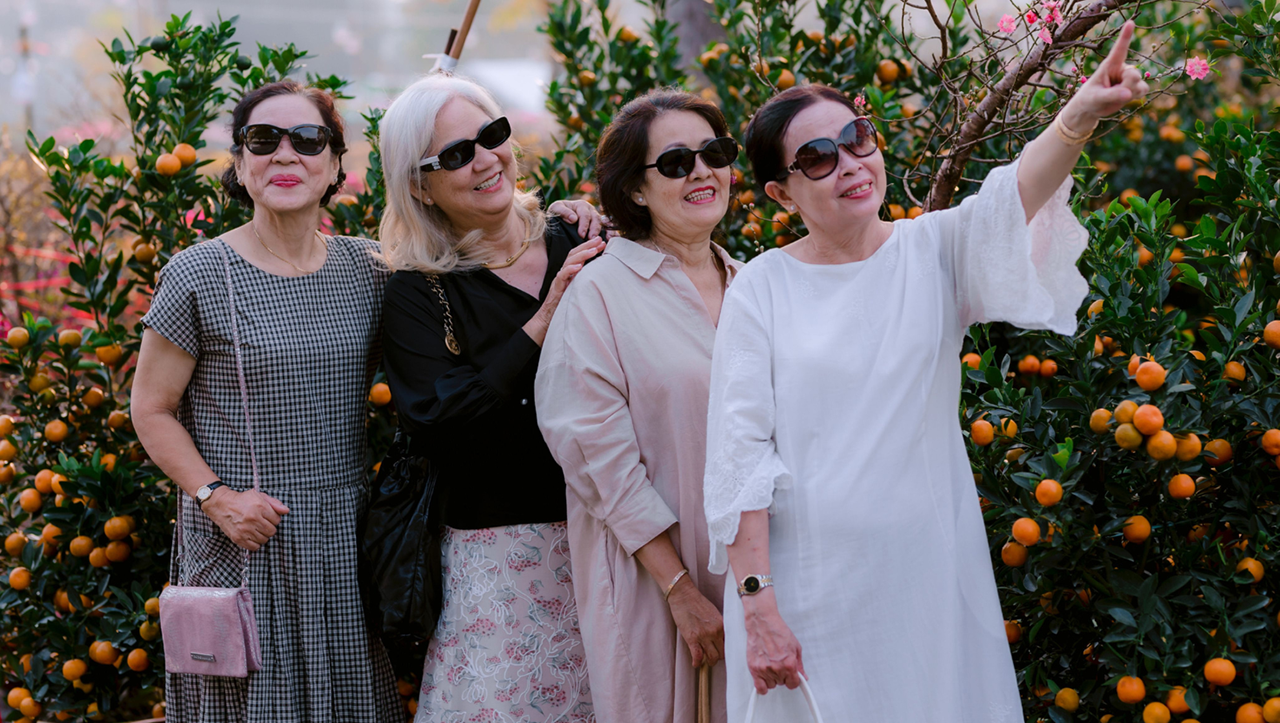
What Silver Consumers Actually Want
While the desire to stay youthful is shared across gen x and baby boomers, Ryusuke says it does not mean they simply idealise youth. “They do not want to look old, but neither are they trying to pretend to be young. Instead, they view physical health and a youthful mindset as essential assets to achieve personal aspirations – whether contributing to family and society, pursuing long-held goals, or indulging in hobbies. Ultimately, our research concludes that aging in ASEAN has evolved into a continuous process of self-renewal and personal flourishing.”
Research from TBWA\KOREA Senior Lab points in a similar direction. “One of the key needs identified among the A Generation is ‘attractive’. This does not mean a desire to artificially turn back the clock or simply look younger. Rather, it reflects a desire to age naturally and gracefully, looking appropriate for one’s age while maintaining a sense of dignity,” Hyejin says. “It is a particularly important need, with 61.1% of the A Generation identifying ‘attractive’ as the need most closely associated with themselves.”
This desire also translates into active efforts to manage their appearance and lifestyles. “The A Generation invests in cosmetics and beauty-related products at a level comparable to millennials and gen z (22.9% vs. 24%), while an even higher proportion actively tries to manage their weight (44.8% vs. 42%),” she says. “Ultimately, through these efforts, they seek to be perceived as wise (16%), bright and positive (14.9%), and dignified (12%).”
Rather than catering to a uniform value system centered on youth, Ryusuke says, “brands can partner with seniors to help them embrace who they are now and fulfill who they want to be. By promoting a pro-aging mindset, brands can help older adults age gracefully and live authentically regardless of age, unlocking powerful, cross-generational support in this rapidly growing market.”
In the luxury market specifically, Jessica says, “The silver generation still highly values in-store experiences: the sales assistant who knows your preferred colours, the comfortable couch and sparkling water while you browse, versus the more frenetic and impulse-driven world of Instagram ads and influencer endorsements. The semiotics of luxury continue to evolve with each generation, and smart brands understand they have to live in many worlds, both the ageing and the new.”
“While the category has moved from age prescription to age representation, the next frontier is age agency,” Hanisha says. “Your age doesn’t tell brands what you want. You do. Beauty has always treated youth as a culture (rich with identities, aesthetics and desires), yet ageing as a condition to manage. The silver opportunity is to give ageing the same complexity and possibility we’ve always afforded youth.”
“Global luxury brands now need to develop products and ranges that reflect the physical and psychological changes associated with ageing, design offline retail experiences that are both comfortable and dignified, and remove barriers from the digital purchasing journey,” Hyejin adds. “At the same time, they need storytelling that presents ‘the beauty created by time’ as a new object of aspiration. What is required is a more thoughtful marketing experience designed around the increasingly differentiated needs and desires of older consumers.”
The winners won’t be the brands “slapping silver models on posters,” Yolanda concludes. “They’ll be the ones doing the unsexy work: immersion, listening, and building products that respect the reality of later life, rather than launching token campaigns with a silver-friendly label. Should brands even feature senior people in ads? In fact, the real question lies deeper than this. It’s whether they can make something older people would choose even if no one put their face on a billboard. It’s whether they can genuinely care beyond the spend. That’s where real respect and the real opportunity lies.”
End article
Read article at:
https://lbbonline.com/news/The-Silver-Opportunity-Is-Luxury-Beauty-Missing-the-Mark


Related content
-
 EventsJul. 8, 2026Bringing Sei-katsu-sha Insight to the world
 -
 NewsJun. 2, 2026Global Chronological Lifestyle Survey on Sei-katsu-sha 2026 results announced
 -
 NewsApr. 1, 2026Decoding the Prime Generations: Expanding Possibilities with Age and the Emergence of “Endless Social Self-Actualization”
 -
 NewsMar. 17, 2026Zhìxiàng: A new desire emerging among Chinese sei-katsu-sha beyond AI