


Bringing Sei-katsu-sha Insight to the world


- Events
- HILL
- ASEAN
The frontlines of research in FY2025 and new forms of sei-katsu-sha insight in a period of technological transformation
A three-way discussion between HILL executives in Japan, China and ASEAN
Exemplifying Hakuhodo’s Sei-katsu-sha Insight philosophy, Hakuhodo Institute of Life and Living (“HILL”) delves into changes in society. In the more than four decades since its establishment in 1981 in Japan, our sei-katsu-sha research activities have expanded to include China, and then ASEAN, and today we communicate information worldwide from these three hubs.
Executives of the three regional hubs in Japan, China and ASEAN gathered for an online conversation in January 2026. Sharing the results of research presentations this fiscal year, they engaged in a deep conversation on the rich personalities behind their activities and the evolution of Sei-katsu-sha Insight in the age of AI.
Attendees
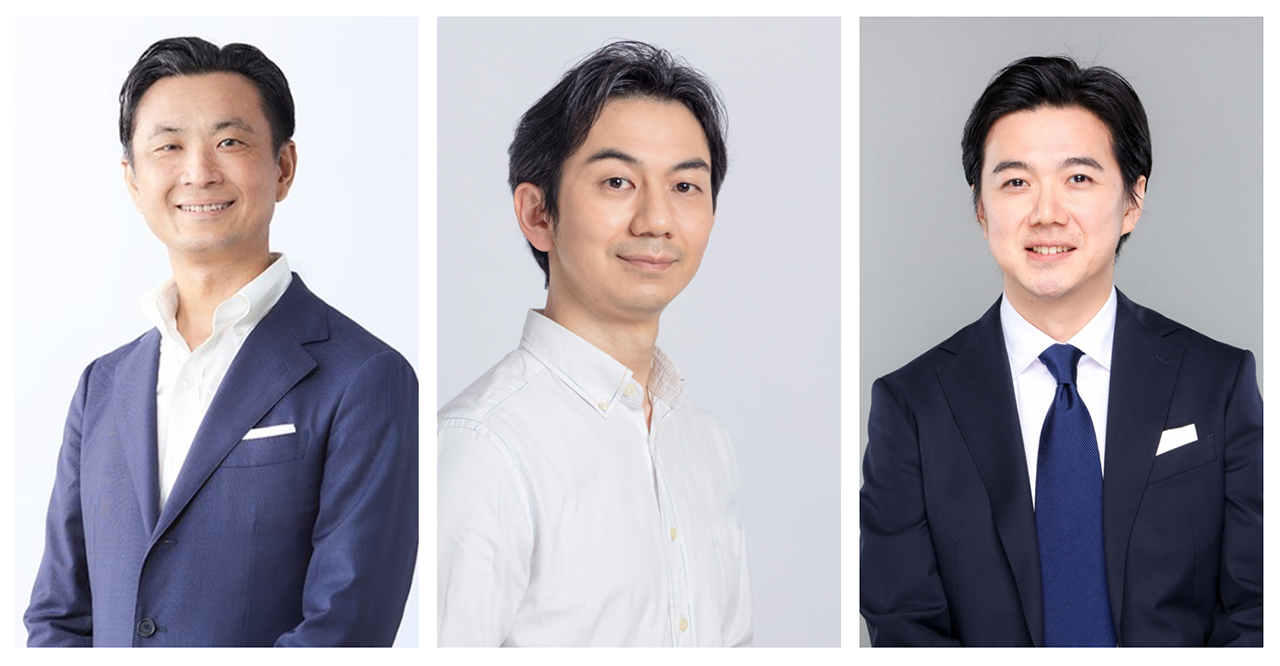
Goro Hokari Director, Hakuhodo Institute of Life and Living Institute
After joining Hakuhodo in 1995, Goro Hokari served as a marketer before establishing HILL ASEAN and serving as its director. With experience in marketing strategy planning and the launch of management consulting business, he assumed his current position in 2025.
Atsuhiro Tada General Manager / Chief Strategy Officer, Hakuhodo Institute of Life and Living Shanghai
Joining Hakuhodo in 2005, Atsuhiro Tada has been engaged in the planning and consulting business in Japan and China since taking up office in China in 2013. He joined HILL Shanghai in 2021 and assumed his current position in 2024.
Ryusuke Aoki Managing Director, Hakuhodo Institute of Life and Living ASEAN
Ryosuke Aoki joined Hakuhodo in 2013 following a stint at a foreign-affiliated advertising company. After launching a strategic unit called Paasons Advisory in 2018, he assumed his present office at HILL ASEAN (Bangkok, Thailand) in August 2025.
Interviewer: Yuko Ito (R&D Director, Hakuhodo Institute of Life and Living)
Three unique institutes: Capturing changes at the “n = 1” level, depth of a long-range perspective, and diversity across countries
ITO: Today, we welcome the leaders of the three offices of HILL to talk about what the research hubs have in common, their uniqueness and the regional forums held at the end of each business year. First of all, please tell us about the origin and characteristics of each HILL.
HOKARI: HILL Japan was established in 1981 with the objective of advancing Sei-katsu-sha Insight, one of the philosophies of Hakuhodo. Regarding the word “institute,” you might associate it with research on macroscopic social trends or a specific industry. Rather, HILL is an institute characterized by studying sei-katsu-sha. As a research institute affiliated with an advertising company, we are also focused on gaining foresight by looking at the present with creativity. Partly because the first director of HILL was a designer, many of the researchers at HILL are former creators such as designers and copywriters.
ITO: Researchers with different professional backgrounds getting together to focus on a single topic is one of the unique strengths of HILL in realizing discussions from various points of view and producing a variety of output.
HOKARI: We are particularly determined to be the first to identify small signs of change in individual sei-katsu-sha, in addition to performing quantitative analysis, and present them with the original perspectives of researchers. Taking food as an analogy, we aim to deliver curated fresh, unwashed vegetables, rather than neatly processed ingredients. We thus delve into the realities of sei-katsu-sha at the “n = 1” level that do not show up in statistics, convey them as vivid information, and shape the future with companies. That’s our style, and one of the interesting features of HILL.
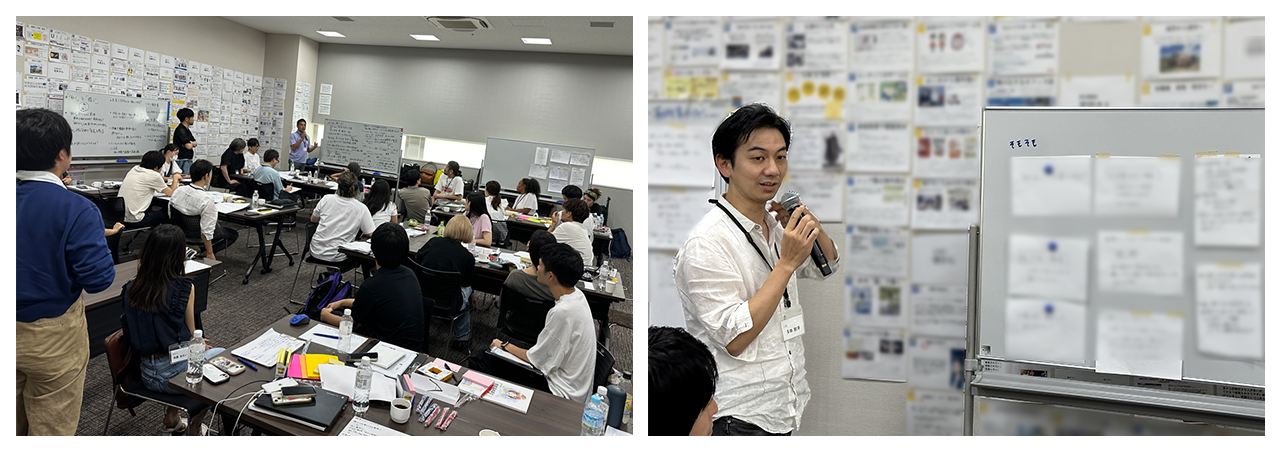 Left: A workshop at HILL in Japan
Right: Members from HILL Shanghai and HILL ASEAN attend the workshops, in addition to HILL Japan staff
TADA: HILL Shanghai was established in 2012 with the mission of raising the presence and reputation of Hakuhodo through research and communication activities realizing Sei-katsu-sha Insight in the fast-changing Chinese market. In addition to providing information for existing clients, we have a CRM function to generate interest in our research among companies we haven’t previously engaged with. HILL Shanghai is also involved in research consulting and planning business, in addition to sei-katsu-sha research.
ITO: It’s true that the Shanghai team differs from HILL Japan in that it deals in client work. What do you think is your strength in terms of research?
TADA: Fads come and go very quickly in China, but we dare to be patient, trying to capture sei-katsu-sha trends from a long-term perspective of five to 10 years. There are very few think-tanks in China that continue doing sei-katsu-sha research for over 10 years. Another strength is our solid partnership of more than 13 years with the Communication University of China, one of the leading research institutes in mass communication and marketing. Another strength is that we have gained an understanding of historical sei-katsu-sha trends in China by repeatedly conducting surveys of cohorts such as the youth and high-net-worth individuals in close collaboration with highly specialized external agencies. In short, our uniqueness lies in the depth of such ongoing research and the accumulation of sei-katsu-sha data that comes with it.
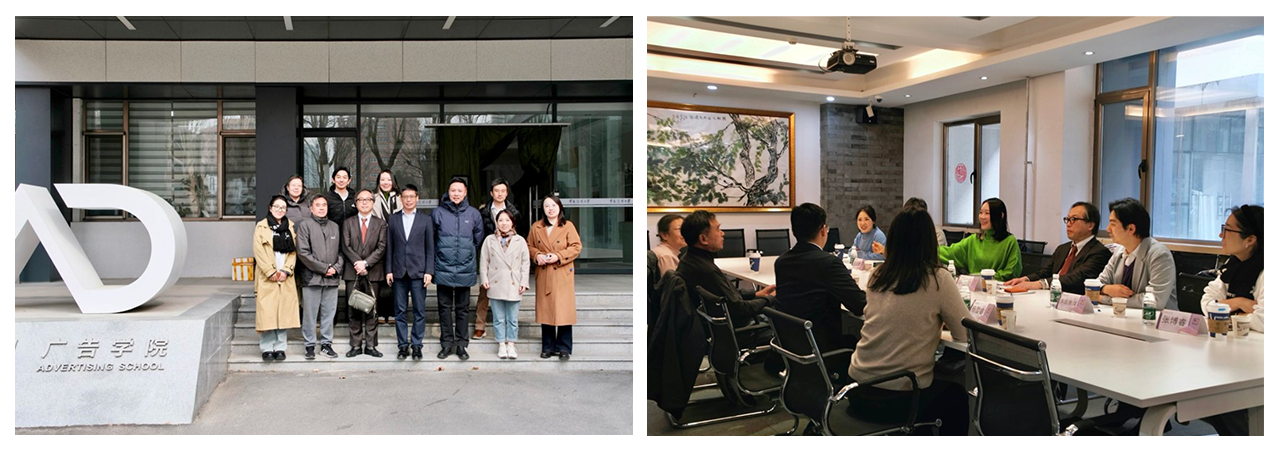 Information-sharing session between the Communication University of China and HILL Shanghai
AOKI: Based in Bangkok, Thailand, Hakuhodo Institute of Life and Living ASEAN (HILL ASEAN) is a unit created in 2014 to conduct sei-katsu-sha research in the ASEAN region. While sharing the same basis with HILL Japan, we play a dynamic role by observing sei-katsu-sha across six countries with different cultures and languages: Thailand, Indonesia, Vietnam, Malaysia, Singapore and the Philippines. We adopt a collaborative structure to conduct joint research among planners at Hakuhodo offices in the member countries assigned as researchers, using English as a common language. In addition to monitoring sei-katsu-sha trends in each country, we also make marketing proposals that apply to the whole ASEAN region.
ITO: We often talk collectively about Southeast Asia or ASEAN, but each country has its specific national characteristics with different historical backgrounds and religions, doesn’t it? The process of analyzing similarities and differences with local members must be very useful.
AOKI: Besides deepening understanding of Sei-katsu-sha Insight, we also serve as a sort of educational institution to develop proprietary knowledge and disseminate it to internal staff in each country to put into practice. One of the products of this is HILL ASEAN (Thailand), an entity jointly operated by a Thai office of Hakuhodo and HILL ASEAN. A team composed of Thai members is actively producing output based on Sei-katsu-sha Insight including “Thailand Consumption Forecast,” a bimonthly quantitative national survey report, and periodical marketing reports specifically targeting sei-katsu-sha in Thailand.
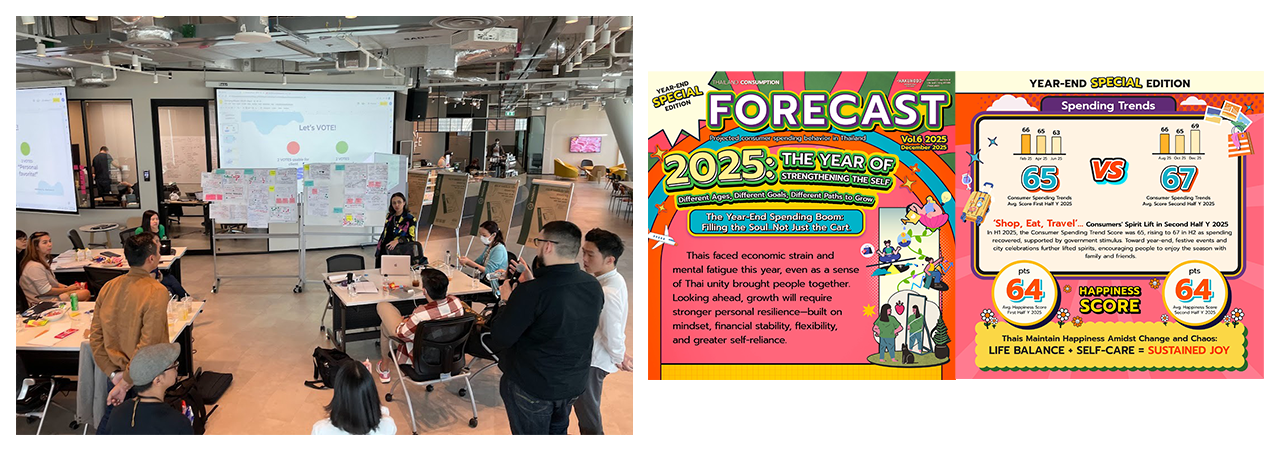 Left: At a HILL ASEAN workshop, researchers from six ASEAN countries gathered for a discussion
Right: Excerpts from a report published by HILL ASEAN (Thailand)
ITO: Thank you very much. Now I understand clearly that your activities share the common concept of embodying Sei-katsu-sha Insight, while adapting to, and evolving with the characteristics of each country/area and Hakuhodo’s global business.
New forms of sei-katsu-sha insight in light of the relationship between AI and sei-katsu-sha
ITO: I think technology is also essential for conducting sei-katsu-sha research. Could you please explain your approach and current/future challenges? I hear that the team at HILL Shanghai has launched a new initiative in China.
TADA: Yes. China is characterized by technological development and the extremely high acceptance of technology by sei-katsu-sha. We have thus introduced a system for AI-powered online interviews. An AI moderator interviews hundreds of sei-katsu-sha to produce a qualitative/quantitative “hybrid” dataset in a few days. Interviewees answer orally, but interestingly, they tend to speak more honestly or reveal more use cases when interviewed by AI than by a human. Our team used this system to ask questions about how people use AI to collect and analyze over 3,000 use cases.
ITO: It’s exciting to see technology expand the way we observe and gain insights into sei-katsu-sha.
TADA: It is also crucial that researchers continuously update their technological knowledge. We think it is better to work in an open space if we are to keep up with technology or gain new perspectives. So, we decided to work in one office with members of the planning, DX and data-driven divisions of a Hakuhodo office in China. We aim to embrace new perspectives and technologies, including bylearning about the perspectives of various strategists and being surrounded by members who are well-versed in technology and those hidata marketing.
ITO: That points to the importance of interaction in generating new ideas.
TADA: We would like to enhance our global partnerships to keep pace with the evolution of technology. Our clients in China have expanded their scope of business to a wide variety of areas. I think that HILL Shanghai also needs to develop the ability to depict Chinese sei-katsu-sha in comparison with sei-katsu-sha in other parts of the world. We would like to elevate both our local and global perspectives in partnership with members of other Hakuhodo offices.
AOKI: Global partnership is something that we also want to enhance in ASEAN. As I have experience of living overseas in my childhood and working for a foreign-affiliated advertising company, I am personally interested in creating cross-regional and cross-cultural value. Since Sei-katsu-sha Insight is one of the philosophies of Hakuhodo, we would like to refine it in global business, too, as a unique strength different from other companies. We are thinking about actively sharing knowledge at forums where global companies gather as one of our future objectives.
ITO: How about technology in ASEAN? I’m sure there is very strong demand for new technology and related services among sei-katsu-sha there.
AOKI: ASEAN people are also enthusiastic about AI. The region is characterized by the fast penetration of smartphones and cashless payments, as well as a high AI adoption rate. In addition to annual presentations of research findings, HILL ASEAN is focusing on giving shape in a more immediate way to the sei-katsu-sha insight that we have gained through social listening, and analysis of animation and other content, while leveraging the digital-native properties of the ASEAN population. Going forward, we are planning to produce enjoyable output for the general public, as well as for clients and the media. Furthermore, we are seeking to refine our sei-katsu-sha insight with technology. We are thus implementing a project to replicate Virtual Sei-katsu-sha, an AI solution offered by Hakuhodo, throughout the ASEAN region.
ITO: Since HILL ASEAN’s research straddles multiple countries, it typically produces different output for each country. It will be interesting to see how Virtual Sei-katsu-sha fares in ASEAN. How about HILL Japan?
HOKARI: In Japan, we are acting on a new theme of Insight to Impact. Under this theme, we hope to put forward impactful proposals to trigger changes in society through our insight into sei-katsu-sha. Thus far, our research has focused on changes in attitude among sei-katsu-sha. But going forward, we hope to take a step forward to make proposals that answer the question: “Now what?” In other words, we are going to address the issue of what questions companies should ask when sei-katsu-sha keep changing.
And that brings us back to sei-katsu-sha insight, the insight part. HILL seeks to find buds of social changes by detecting changes among se-katsu-sha, but a social change seems to happen suddenly when incremental changes accumulate and exceed a certain threshold. Then comes a complete reversal of conventional wisdom. We hope to find signs of such complete reversal at the right moment, combining AI and other technologies with the foresight of researchers.
ITO: I hear that HILL Japan has been engaging in a new initiative to maximize impact.
HOKARI: We have tweaked the way we deliver information published by HILL. In addition to text-based media, a traditional communication channel for a research institute, we have adopted new channels that can reach the younger generation, including smartphone-compatible manga and short-form videos. Engaging with clients through conversations for mutual inspiration and learning will also be one of our priorities going forward. Meanwhile, our internal initiatives include the development of original AI tools capable of sei-katsu-sha insight and coaching sessions to deduce creative business questions from changes among sei-katsu-sha, through direct conversation with members on the ground.
Highlights of the FY2025 forums: Insight into socially-impactful changes among sei-katsu-sha in Japan, China and ASEAN
ITO: Each of you organizes an annual forum to present the findings of sei-katsu-sha research. Can you outline some specific findings to be presented at the forums which you find intriguing?
*The presentations of research findings by the three arms of HILL are invite-only events for clients of the Hakuhodo DY Group. The findings presented at the event will be available later on the respective websites.
HOKARI: This year, HILL Japan renamed its major annual winter lecture event “The Human-Led Intelligence Series.” We are now required to learn from various areas of intelligence including humanities and body wisdom, but HILL aims to stress the importance of “human-led intelligence,” or knowledge gained from sei-katsu-sha.
Our research theme is “Sentiments of the Japanese.” A comparative survey points to the surprising possibility that the total volume of sentiments among the Japanese has declined in the last 15 years. The question is: are people in Japanese society holding back their emotions? We named this phenomenon the “Emotion-Muting Society ,” where holding back emotions, both negative and positive, is considered a virtue or commonsense. As people naturally hold back their emotions, we ask challenging questions like: How should companies ensure options for sei-katsu-sha, including by accompanying people holding back emotions or offering a place where people can relax and be open?
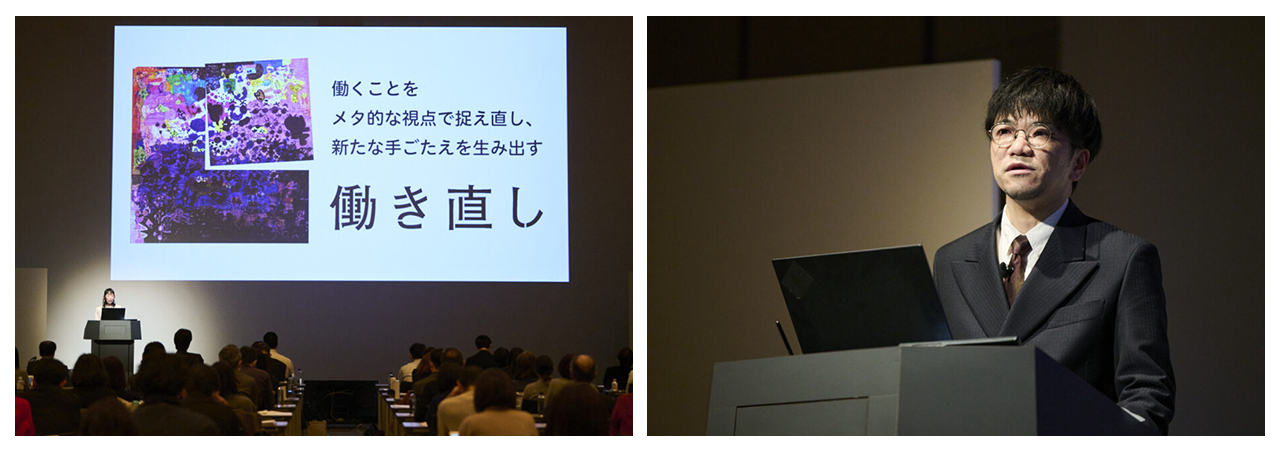 Last year’s winter lecture by HILL Japan
TADA: In China, we present our research findings annually under the title “The Dynamics of Chinese People,”and our research theme is “Portents of New Attitudes and Behaviors Emerging Among Chinese Sei-katsu-sha Beyond the Penetration of AI.” This year marks the first anniversary of Chinese-developed AI, which appeared during the Lunar New Year of 2025 and shook the world. Rather than providing information on the use of AI in China, HILL Shanghai conducts research on the emerging attitudes and changes in behavior among sei-katsu-sha as they explore innovative ways of making the best use of AI.
ITO: I am very interested in how Chinese sei-katsu-sha use AI and their changing attitudes toward AI as leaders in the use of AI.
TADA: Sei-katsu-sha in China are very positive about AI. Having passed the stage of using AI simply for convenience, individual sei-katsu-sha are beginning to find something that only they can do or rediscover their intrinsic capabilities as humans or what they really like, as they become increasingly AI-savvy. For instance, some of them instruct AI to write a sequel to an old game they used to play, and end up digging deeper into their passion after realizing: “That’s what I really love after all.” By focusing on internal changes in sei-katsu-sha who use AI, and new changes in their behavior as they make fuller use of AI, we would like to demonstrate what we at Hakuhodo, and HILL, have to offer.
This year’s Dynamics of Chinese People will be an occasion to reveal a brand-new change in attitudes: using AI for self-improvement and self-rediscovery, not just for improving task efficiency.
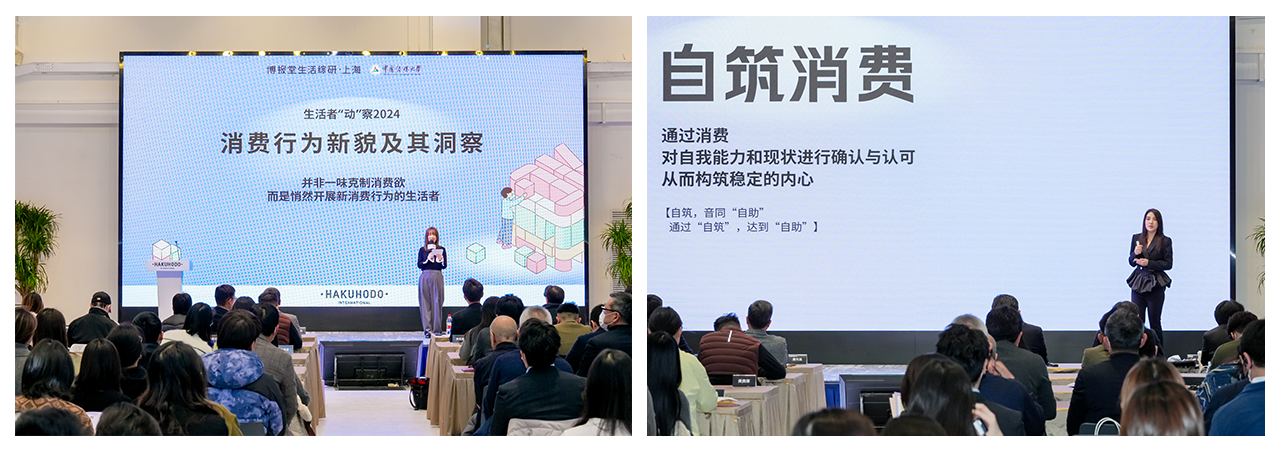 Last year’s Dynamics of Chinese People by HILL Shanghai
AOKI: HILL ASEAN’s ASEAN Sei-katsu-sha Forum focuses on the 40+ population, which has been overlooked as a target of marketing in ASEAN. As the sayings go, “at forty, one is no longer confused by life,” and “life begins at 40.” But how do 40+ people manage to strike a balance between their increasing responsibility toward their family and society on the one hand, and their own motivation and desires on the other? Our theme this year is “Aspirations of Adult Sei-katsu-sha in ASEAN” ranging from millennials to baby-boomers. Circumstances differ among ASEAN countries: Singapore and Thailand are already characterized as aging societies, while Vietnam is expected to follow them soon. Now may be the time to gain insight into the realities and attitudes of the senior demographic, an age group that is expected to grow, rather than solely focusing on youth as the main target audience.
ITO: What is your impression after your research?
AOKI: Our door-to-door surveys across ASEAN countries happily produced quite a few findings that differed from our initial assumptions. One of the findings is that 40+ people in ASEAN are surprisingly committed to spending time on family and society. Although this may be related to their social or religious background, they do not feel they are sacrificing time for their family; rather, they are meeting their need for self-esteem, and thus the desire to stay young, by contributing to society and helping others. Those over 60 are particularly active. I guess the real image of powerful ASEAN seniors—“My brain will get old unless I keep moving”—will be an eye-opener for many companies. Cross-border comparisons of the qualitative and quantitative survey results will also be interesting. As usual, we will present overall trends in ASEAN, referring to characteristics at the national level as appropriate.
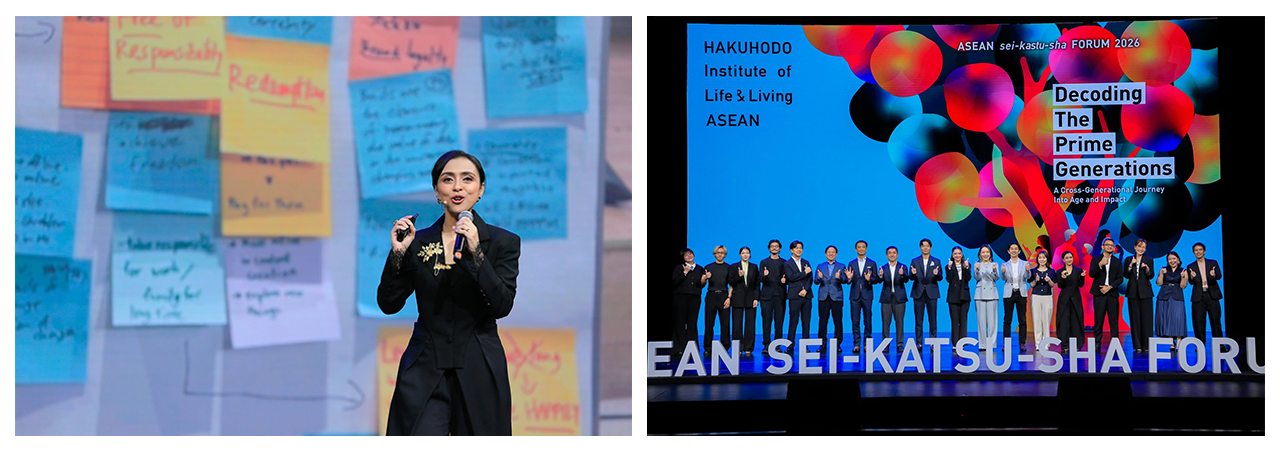 World Premier of HILL ASEAN’s ASEAN Sei-katsu-sha Forum in Thailand
ITO: Thank you very much. All of your themes sound interesting as they offer foresight into the coming future in each country and area. I can’t wait to see the findings!
Postscript: Connecting the three dots to make a powerful “plane”
ITO: From today’s conversation I strongly felt that the three HILLs are tightly linked to each other by the underlying Sei-katsu-sha Insight philosophy, while retaining their own unique strengths: creative insight in Japan, tech use and depth in China, and cross-cultural awareness in ASEAN.
Our unique insights into sei-katsu-sha and signs of changes in society will be conveyed to the world by connecting the three dots into a plane for Sei-katsu-sha Insight that spreads across Asia and the globe. Please look forward to details of the regional research reports and forums, which will be promptly posted on our official websites.
 Scenes from the roundtable discussion. From left: Goro Hokari, Atsuhiro Tada, Ryusuke Aoki
This article is based on the contents of the roundtable discussion held on January 14, 2026.
Hakuhodo Institute of Life and Living
Established in 1981, Hakuhodo Institute of Life and Living is a world-renowned think tank that has been instrumental in advancing Hakuhodo’s Sei-katsu-sha Insight philosophy. HILL’s work begins from the perspective that consumers are multi-dimensional, flesh-and-blood individuals rather than categories of faceless consumers.
HILL employs time-series surveys to trace changes in the values of sei-katsu-sha, adopts cutting-edge and experimental methods to uncover portents of the future and emerging trends, and goes far and wide to meet sei-katsu-sha where they live to discuss the issues relevant to them.
https://seikatsusoken.jp/english/
Hakuhodo Institute of Life and Living Shanghai
HILL Shanghai, a wholly owned subsidiary of Hakuhodo Inc. of Japan established in 2012, is the Hakuhodo Group’s think tank in China. Leveraging sei-katsu-sha research know-how amassed in Japan, the Institute supports companies’ marketing activities in China, while developing local insights and making proposals on future ways of living in China.
Key activities:
• The Dynamics of Chinese People: Research that identifies the true desires of sei-katsu-sha and puts forward ideas for new ways of living
• Research on specific themes: Analysis of specific product categories including automobiles, cosmetics and foodstuffs, and of specific sei-katsu-sha segments such as young people and high net worth individuals
• Consulting and recommendations: Advice on sei-katsu-sha insight-based marketing activities
https://www.shenghuozhe.cn
Hakuhodo Institute of Life and Living ASEAN
Established as an in-house think tank studying sei-katsu-sha in 2014, HILL ASEAN is dedicated to supporting clients’ marketing efforts in ASEAN countries, as well as observing the new lifestyles emerging in this dynamic region and proposing ideas for ASEAN sei-katsu-sha.
Location: Bangkok, Thailand
Research and other activities: Research and analysis from the local perspectives of each ASEAN nation and the organization of forums across ASEAN
https://hillasean.com/


